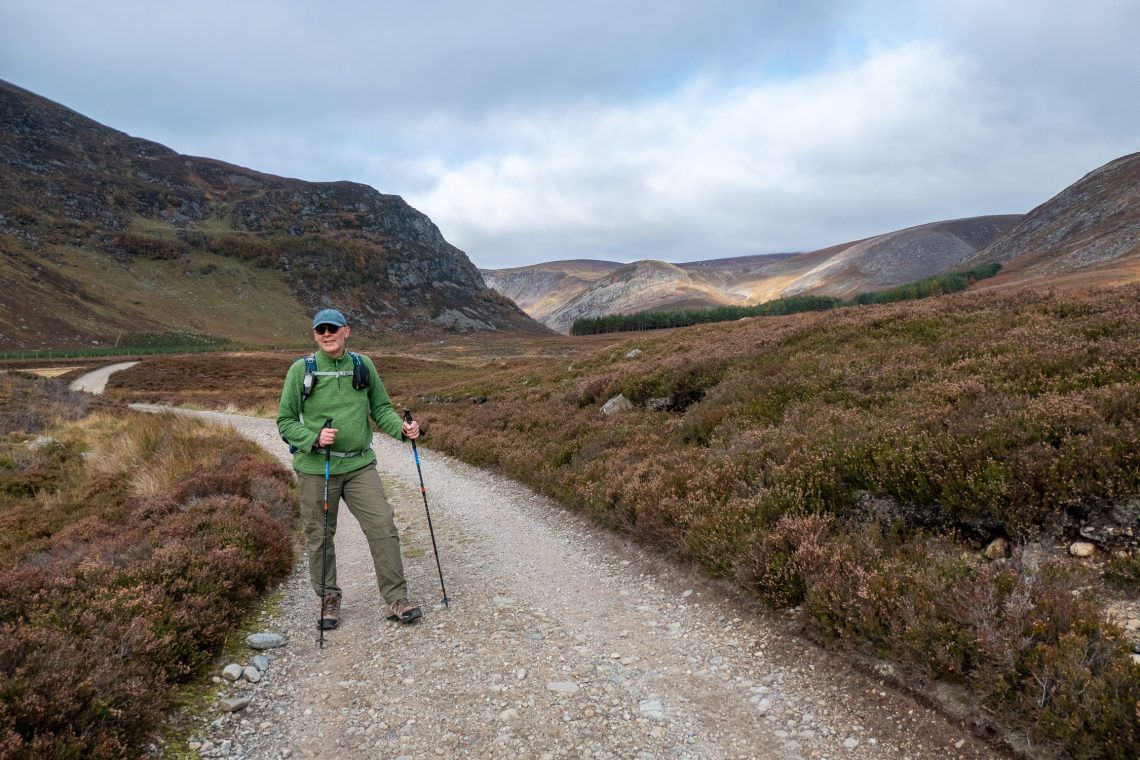
When I’m packing for my annual trip to my mum’s, I’m not particularly bothered about forgetting things; I know I can buy locally whatever I forgot to take. But a day trip to the mountains is a completely different story. I pack my backpack meticulously, paying particular attention to vital equipment. I always pack more than I expect to need, and most of the time I don’t use everything that day. The point is that in the wild, I can only use what I have with me; there are no shops or other ways to get emergency clothing, food, drink, batteries or shelter. I learnt this the hard way over many years of hill walking, and, dare I say, many times such precautions have paid off when circumstances changed unexpectedly. Recently, the British government urged us to keep enough water, food, and other supplies to last a household for at least three days of disruption. Reactions to such an announcement have varied. There were reports of sudden doubling and tripling of sales of suggested products, like bottled water, baked beans and wind-up radios. At the other end of the spectrum was a light-hearted declaration by a prominent figure in the same government who listed make-up items and wine as her personal choices for an emergency disaster kit. In a sense, it provides a very topical illustration of the parable in today’s gospel.
It referred to specific ancient wedding traditions familiar to Jesus’ audience, though their finer details are now lost to us. It was customary for the groom to arrive at the bride’s house in the early evening (when it was often already dark outside) and then, in procession, take his bride to the wedding venue. The bridesmaids in the parable had an important role: to lead the procession with their lamps and to welcome the bridegroom when he arrived. Their lamps would have provided both practical light and a festive glow in the darkness. We can imagine the excitement as those flames approached, signalling that the celebration was about to begin. They needed a lot of oil to keep their lamps lit throughout the proceedings, but only half of them were prepared for a possible delay, something that must have been a common occurrence; otherwise, calling the unprepared bridesmaids “foolish” would be unjustifiably harsh. Jesus concluded the parable with a warning: “Watch therefore, for you know neither the day nor the hour.” What did he mean by that?
This parable is part of a two-chapter-long apocalyptic speech by Jesus in St Matthew’s gospel. He foresaw various dramatic events, like the destruction of the Temple in Jerusalem, wars, persecutions, famines, to name just a few. The overall tone is downbeat and gloomy, likely filling the audience with sadness and anxiety. In the context of the first-century Christian communities, the first readers and listeners of the gospel had already experienced at least a partial fulfilment of those depressing prophecies. However, within those doomsday predictions were lines that gave them hope and helped keep the faith: those disastrous events marked the arrival of the kingdom of heaven and their triumphant Lord of lords and King of kings: “All the tribes of the earth […] will see the Son of Man coming on the clouds of heaven with power and great glory. And he will send out his angels with a loud trumpet call, and they will gather his elect from the four winds, from one end of heaven to the other.” (Matthew 24:30-31) Today’s parable concerned Christians who initially embraced the gospel message enthusiastically, expecting Jesus’ prompt return in glory, but over time the flame in their hearts flickered or was extinguished, weakening their commitment. It’s human nature that, given time, we can adapt relatively easily to harsh conditions and consider them “normal”, as testified by many of our contemporaries living under oppressive regimes or in extreme poverty. The parable warned against falling into such conformity; instead, Jesus’ disciples should continue their mission: “You are the light of the world. A city set on a hill cannot be hidden.” (Matthew 5:14)
These days we are less likely to expect a worldwide cataclysm to kill us all, though humankind has made it possible by amassing enough nuclear weapons to finish us all a few times over. Neither can we rule out a cosmic-scale collision, though we are better equipped to predict it than dinosaurs were some 66 million years ago. Consequently, our vigilance can easily lapse or diminish. Politically, this happened in the West after the Cold War, when we enjoyed the so-called “peace dividend”, and now we find ourselves unprepared to deal with suddenly rising new challenges. On a personal level, a relatively comfortable, predictable life can make us take things for granted. While we should always be grateful to God for such comfort, we must also remain prepared for those moments when life throws a curveball at us, when a sudden unexpected event can mean the end of the world as we know it. When it inevitably happens, we will need strength, resolve and ingenuity to deal with that, and the Christian faith provides that: “Who shall separate us from the love of Christ? Shall tribulation, or distress, or persecution, or famine, or nakedness, or danger, or sword? […] No, in all these things we are more than conquerors through him who loved us.” (Romans 8:35-37)
