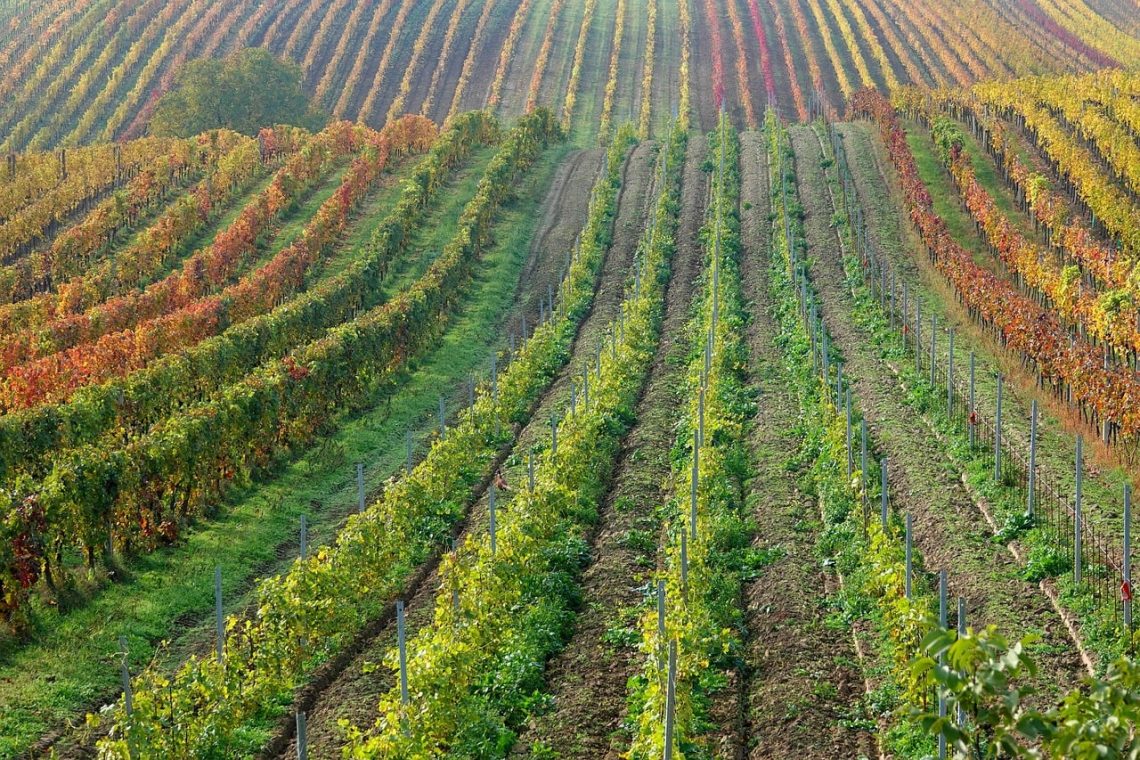
Just a couple of months ago, news bulletins focused on the dramatic consequences of the extremely hot summer across the continent and in England. Footage and photos of raging wildfires, parched fields and scorched ground dominated TV screens and front pages, accompanied by reports of residents fleeing their homes, farmers helplessly watching their crops wither and ordinary people struggling in the merciless heat. Here in Scotland, we were relatively unscathed, though I remember one day walking through Inverurie when I noticed a haze in the air and a distinctive smell of burned wood, carried by winds all the way from the burning Cairngorms. At times, it felt a bit like watching an apocalypse unfold on screens. However, the hot summer that brought misery to so many south of the border has had some unintended, positive consequences for some: “English winemakers expect ‘vintage year’ after record-breaking summer heat” reads one of many headlines. To my surprise, I have learnt that there are now 943 vineyards in the UK, almost triple the number 20 years ago. Just one of them has recruited 500 pickers for this year’s harvest. If things keep developing this way, soon here in Scotland we might have a personal experience so familiar to Jesus’ audience that he widely used it in his teaching, like the parable in today’s gospel.
It wasn’t anything new. The Old Testament is full of references to vineyards, as they had played a hugely important role in Middle Eastern agriculture since at least 3000 BC. In the Book of Judges, there’s a story of two stepbrothers, sons of Gideon Jerubbaal. One of them plotted with his mother’s clan to become king, and in order to do so, he murdered all his brothers but one, Jotham. After the coronation, Jotham, from a safe distance, told the gathered a fable of the trees, in which they asked the olive, fig, and vine to rule over them; each declined, but the way in which the latter did it highlighted the cultural importance of wine: “Shall I leave my wine that cheers God and men and go to hold sway over the trees?” (Judges 9:13). In today’s first reading, the prophet Isaiah allegorically portrayed the Lord, who worked very hard to build a productive vineyard only to be disappointed when it yielded sour grapes. The meaning of the allegory was explained at its conclusion: “For the vineyard of the Lord of hosts is the house of Israel, and the men of Judah are his pleasant planting.” The meaning of the sour grapes must have hit the story’s original audience hard, as it used untranslatable near-homophonic puns: “[The Lord] looked for justice (mishpat) but behold, bloodshed (mispah); for righteousness (tsedaqah), but behold, an outcry! (tse’ aqah)” The prophet Isaiah’s parable addressed widespread social wrongdoing in his contemporary society, urging his fellow citizens, on pain of destruction, to change and return to the righteous ways expected of them, as allegorically portrayed in the parable. The Old Testamental tradition saw the Assyrian and Babylonian respective conquests of the kingdoms of Israel and Judah as the fulfilment of that threat, implying that the parable’s original audience didn’t heed the prophet’s calls.
Jesus’ parable was very similar to Isaiah’s, with one distinctive difference: it did not threaten to destroy the vineyard, but to hand it over to different tenants who would meet their obligations. This parable was a continuation of the dispute between Jesus and the Jewish elites he accused of not heeding John the Baptist’s calls for repentance, as we heard last Sunday. Jesus finished his parable by asking his opponents: “When the owner of the vineyard comes, what will he do to those tenants?” Their correct answer, “He will put those wretches to a miserable death and let out the vineyard to other tenants who will give him the fruits in their seasons”, showed their understanding of right and wrong; they couldn’t claim ignorance. They had known and understood John’s calls but chosen to ignore them. Consequently, Jesus told them: “The kingdom of God will be taken away from you and given to a people producing its fruits.”
The conclusion must have resonated with the struggles of the first, primal Christian communities, torn by bitter infighting between Gentile Christians and their Jewish counterparts, who insisted on keeping Jewish religious practices as the only way to properly worship God. St Paul and many others rejected the old dispensation, focused on rituals in minute detail, as meaningless. What really mattered was active charitable love: “the whole law is fulfilled in one commandment: ‘You shall love your neighbour as yourself.’” (Galatians 5:14). Genuinely practised, such love must produce the right outcome: “the fruit of the Spirit is love, joy, peace, patience, kindness, goodness, faithfulness, gentleness, self-control.” (Galatians 5:22-23) That’s the fruit that we too must strive to produce.
