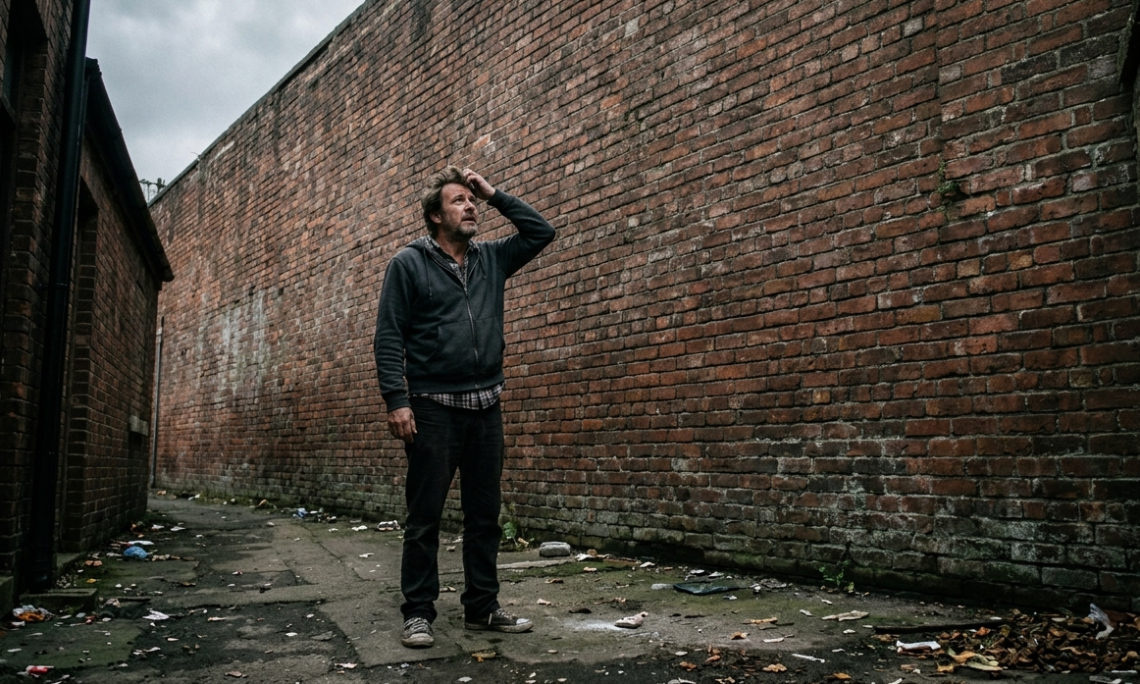
A good old friend of mine recently visited me with one of his sons as part of their father-and-son summer road trip. They stayed overnight at my place, a “quarter-star B&B”, as I call it due to its modest offerings. We had a good time catching up and sharing stories over delicious Indian food, which the early-primary-school-aged boy enjoyed as much as we, two middle-aged geezers, did. At the end of our lovely evening, we sat down to watch the News at Ten – that the boy did too was a big mistake. When the first disturbingly age-inappropriate report popped up, his father managed to divert his attention to decoding some words on a random piece of paper at hand. But when more stories like the first one turned up, he called it a day and both retreated to their “penthouse” in the attic. The presence of the innocent wee boy put into much greater contrast how saturated our lives are with bad news. Despite having normalised it all as a coping mechanism, we can still be overwhelmed by such a torrent of disasters, tragedies and grief, resulting in a sense of helplessness and hopelessness. What can we do in the face of stupid decisions made by delusional but powerful men on the one hand, or the actions of nobodies trying to make their mark by harming people on the other?
Sometimes the world feels as dark and gloomy as it did when Jesus’ disciples were sailing on choppy waters against headwinds in the middle of the night, without their Master’s reassuring presence. Having witnessed the spectacular miracle of multiplying food, they didn’t have time to bask in glory, as “immediately Jesus made the disciples get into the boat and go before him to the other side.” So they did. Interestingly, it seems they didn’t ask an obvious question: how would Jesus make it to their destination without a boat? But the gospel doesn’t mention them raising it. They didn’t have to. When we heard that the disciples were to sail “to the other side,” we assumed they would have travelled across the large Sea of Galilee, so going around it on land would be a long trek for Jesus. In fact, the distance between the traditionally placed location of the food-multiplication miracle and their destination, Gennesaret, was around six kilometres (4 miles) along the western coast of the lake; quite walkable on the hard land. So the disciples might have assumed that would be Jesus’ mode of travel; I’m absolutely certain they didn’t expect him to walk on the water.
Their journey in the boat was a hard gig: they were “a long way from the land, beaten by the waves, […] the wind was against them.” Their vision was severely limited; even with their eyes adapted to the darkness, they couldn’t see much, as we are not a nocturnal species. With the wind howling, it was a perfectly spooky environment, where their minds could conjure fearful thoughts, fed by local folk stories of ghosts, ghouls and the like. No wonder that “when the disciples saw [Jesus] walking on the sea, they were terrified, and said, ‘It is a ghost!’ and they cried out in fear.” We have a saying: “fear makes things look worse than they are.” It means that when you are afraid, your imagination exaggerates the danger or difficulty of a situation. The saying is built on common experience. Such fear can heighten the feeling of helplessness to the point of mental paralysis or despair. The disciples must have felt utterly defenceless, trapped in a boat tossed by the waves and wind and exposed to a hostile ghostly appearance. Is it not how we may sometimes feel when everything seems to go against us, the walls are closing in, and there’s no escape route in sight?
“Take heart; it is I. Do not be afraid.” Jesus offered this reassurance from a distance, remaining outside the boat. It prompted Peter to make an outlandish request: “Lord, if it is you, command me to come to you on the water.” In other words, he wanted a sign, a miracle. And it almost happened, except that he began to drown as he neared Jesus. Saved by him, Peter was instantly rebuked: “O you of little faith, why did you doubt?” Jesus’ reproach wasn’t addressing Peter’s sudden drowning at the end of his water-walk but rather his initial request: “Lord, if it is you…”. He doubted it was Jesus, in a very similar way to his opponents and to the tempter in the desert: “If you are the Son of God, tell these stones to become bread.” (Matthew 4:3) Prove you are the Special One by performing miracles. Peter’s mild humiliation was a slap on the wrist for his doubts combined with cockiness.
When we are in difficulty or trouble, we might pray for a solution or escape; sometimes this can almost take the form of emotional or spiritual blackmail, expecting God to prove his worth by performing a miracle: “If you are all-mighty, please use your might to help me.” The assumption is that God would deliver us in a specific way we have devised, rather than being open to whatever way God chooses to save us. Sometimes the best we can get are the reassuring words: “Take heart; it is I. Do not be afraid.” With Jesus beside us, the fear subsides, and we can see the threats, dangers and challenges in their realistic dimensions, as something which, at worst, we are able to then cope with, or at best even manage to deal with.

