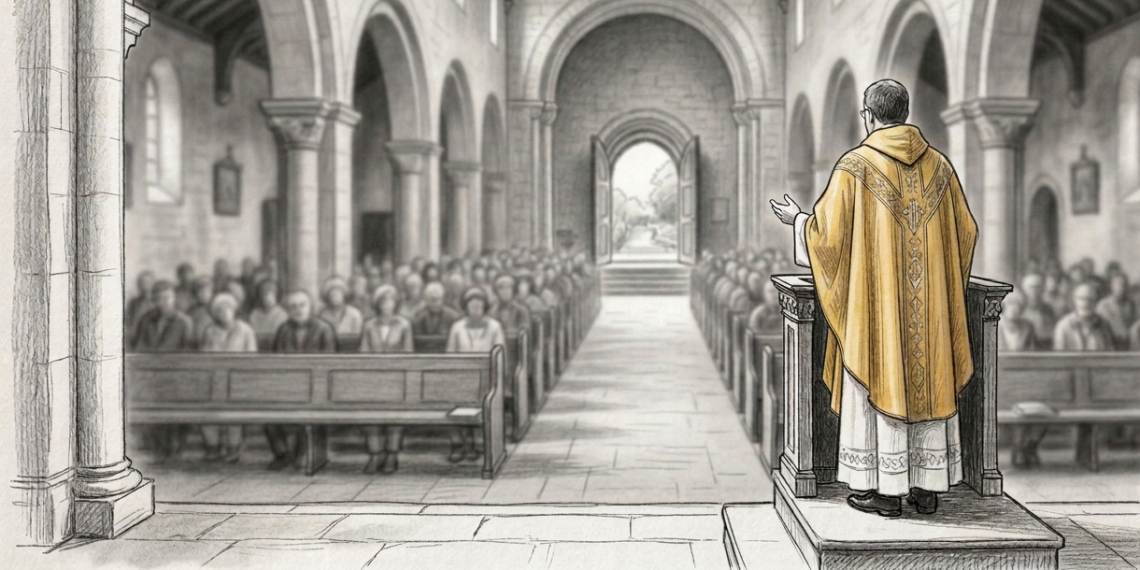
An elderly woman walked into the local church. The friendly usher greeted her at the door and asked politely, “Where would you like to sit?” “The front row, please,” she answered. “You really don’t want to do that,” the usher said, “the priest is really boring.” The woman asked in return, “Do you know who I am?” “No,” he said. “I’m the priest’s mother,” she replied indignantly. He then asked her, “Do you know who I am?” She replied, “No.” He answered: “Good.”
When strangers meet and start a conversation, they most often either introduce themselves by name or are asked for it. Similarly, when an appointment is made, the first detail we give to identify ourselves is our name, followed by other details that depend on the arrangement, such as date of birth for a medical appointment, but not for a table reservation at a restaurant. In a sense, the name is the most personal part of one’s identity, so much so that we use phrases like “name and shame” to single one out for individual blame and censure, or “clearing one’s name” when one’s reputation has been damaged by false accusations. We take our virtually inseparable, deep attachment to our names as obvious and natural, while in fact it is quite strange when you consider the origin of your name: it was given to you by your parents; they made the choice, and you had no say in the decision. Despite that, your name is an important part of your identity because, deep down, it means you belong with others (your family, in this case); you are not an outcast. The need to belong is so hardwired in our minds that some people go to great, sometimes desperate, lengths to achieve it. It’s the driving force behind the peer-group pressure among teenagers, the initial success of social media platforms like Facebook, or, in extreme form, gang membership, as reported by those who work with young offenders.
The fundamental importance of belonging is highlighted by another social phenomenon: adoption. I have heard many stories of people who, having learnt they had been adopted, went through a deep crisis of their identity and questioned their belonging to the family they had known for all their lives. Some of them embarked on the journey of finding their biological parents to understand why they had been abandoned. However, most of those adopted, having grown up surrounded by love, are deeply grateful to their parents for giving them a home and a sense of belonging.
We started this celebration “in the name of the Father, and of the Son, and of the Holy Spirit” while making the sign of the cross on our foreheads, chests and shoulders. Without trying to offend, I suppose most of us did it without too much thinking. But the meaning of these words and the gesture is profound. The latter recalls the death of Jesus on the cross, the ransom paid for our freedom. The consequences of his sacrifice have been far-reaching, as presented by St Paul: “at one time you were far away from God, but now in Christ Jesus, you are brought […] near to God through the blood sacrifice of Christ. […] He did this with his death on the cross. […] Through Christ we all have the right to come to the Father in one Spirit. So now you […] are not visitors or strangers […] You belong to God’s family.” (Ephesians 2:13-19) In another place, he almost mirrored what we heard in today’s gospel: “God sent forth his Son, born of woman, born under the law, to redeem those who were under the law, so that we might receive adoption as sons. And because you are sons, God has sent the Spirit of his Son into our hearts, crying, “Abba! Father!” So you are no longer a slave, but a son, and if a son, then an heir through God.” (Galatians 4:4-7) In other words, we have been invited into the intimate, internal, “domestic” life of God. Every time when we start our prayers, or sacramental confession, or the Eucharist “in the name of the Father, and of the Son, and of the Holy Spirit” we remind ourselves of this deep connection with God as He uttered through the prophet Isaiah: “you are precious in my eyes, and honoured, and I love you.” (43:4)

